
First steps in ballet and music
Creative movement, pre-ballet and three great approaches to music teaching: when children can begin, what early classes look like and how to keep the joy alive.
Long before any formal lesson, children respond to music with their whole bodies. They sway, bounce, clap and turn in circles. Ballet and music classes build on that instinct, and the question for parents is less how early to begin than how to begin well: with the right kind of class, a good teacher and a pace that keeps pleasure at the centre.
What early dance classes really look like
For toddlers and preschool children, first classes are usually called creative movement or . They focus on rhythm, coordination and imagination rather than technique. Children might march and skip, stand still when the music stops or drift across the room like a falling leaf, and in doing so they learn to listen and to move with intention.
At this age the aim is not correct positions but a love of moving to music. A good pre-ballet class feels like structured play, with a clear beginning and end, a few simple routines and plenty of room for each child’s own interpretation. If your child comes home humming the music, the class is doing its work.
From pre-ballet to graded classes
As children grow, classes become more structured. The Royal Academy of Dance offers graded children’s exams, starting with Pre-Primary in Dance, aimed at children from about five years old. Whether a child takes exams at all is a decision for the family and the teacher; the value of a graded syllabus lies in the clear sense of progression it gives.
One milestone deserves particular patience. , dancing on the tips of the toes in pointe shoes, is generally not started before about eleven or twelve years of age, and only after several years of regular training. That is the advice of dance teachers and dance medicine specialists, and a responsible teacher judges readiness by training and strength, not by birthday alone.
Three ways into music
Music teaching for young children has been shaped by a few influential approaches, each with its own emphasis. Knowing them helps you understand what a teacher means when they describe their method, and which one might suit your child.
The , developed by the Japanese violinist Shinichi Suzuki, starts children on an instrument as young as about three or four. They learn by ear, in the way a child learns a mother tongue, by listening and imitating. Parents play a strong part, attending lessons and guiding practice at home.
The Kodály approach, developed in Hungary from the ideas of the composer Zoltán Kodály, builds musicianship through singing, folk songs and . The voice comes first, an instrument every child already carries.
, developed by the Swiss musician Émile Jaques-Dalcroze, teaches music through movement. Children walk the beat, step out rhythms and trace the shape of a phrase with their arms, which makes it a natural bridge between the dance studio and the music room.
Choosing a teacher and a class
The method matters less than the person who teaches it. Before you commit to a term, ask whether you may watch a class. A good teacher of young children speaks calmly, keeps the group engaged and adapts when a child is tired or shy. These are the signs worth looking for.
- Classes grouped by age, with content that suits that age
- A warm atmosphere in which mistakes are part of learning
- Clear guidance on what is expected at home, especially for instrument lessons
- A teacher who explains the reasons behind the rules, for example why pointe work has to wait
- Short, varied activities rather than long stretches of standing still
The method matters less than the person who teaches it.
Dressing for the first class
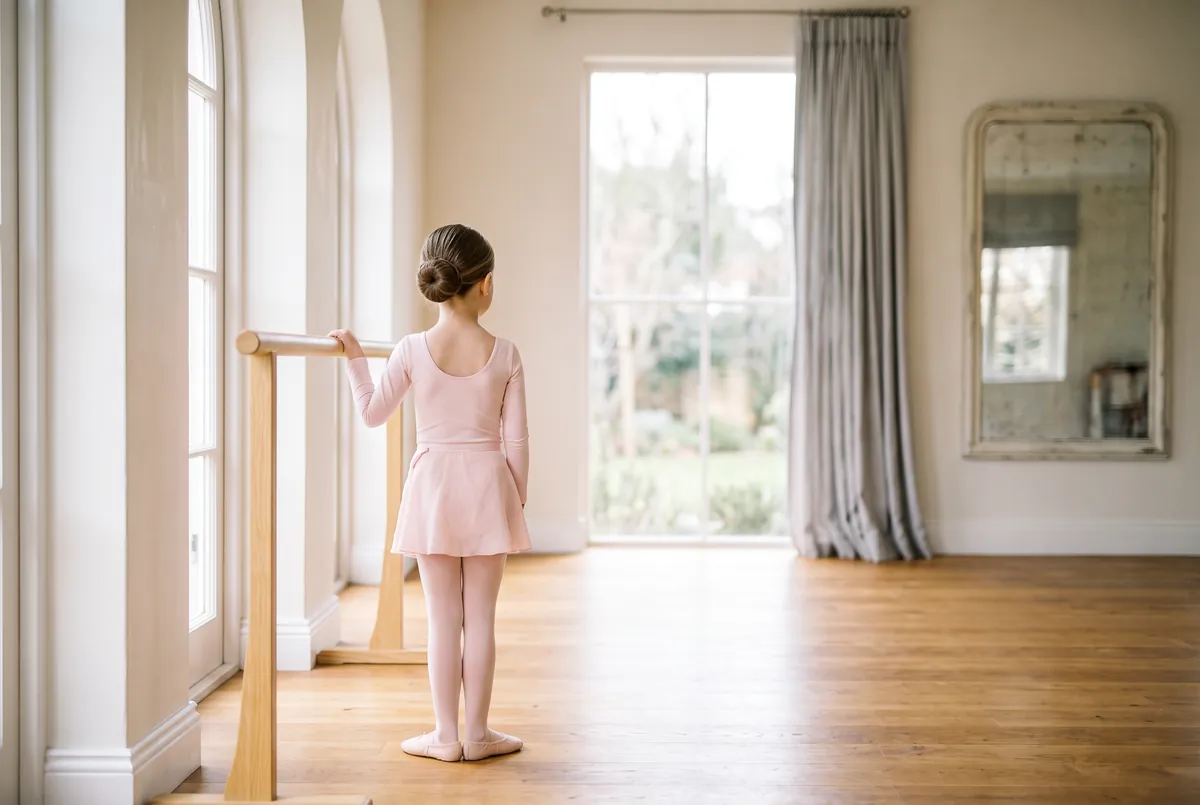
Beginners need very little. A simple leotard, tights and soft ballet slippers that fit now, with hair tied back, are enough for a first class. Resist buying slippers a size up to allow for growth: a slipper that fits lets the foot feel the floor, while a loose one slips and distracts.
Many schools ask for a particular colour or style, so check with the teacher before you buy anything. Plain, well made pieces in soft colours look graceful, wash well and can be handed down to a younger sibling.
Keeping the joy alive
Interest in any art rises and falls. A child who loved ballet at four may want to play the drums at seven, and both are part of finding out what they love. Keep practice at home short and regular, and let music belong to family life rather than to a timetable: songs in the car, a record on a Sunday morning, dancing in the kitchen.
Praise effort and curiosity more than results, and come to the end-of-term performance ready to enjoy it whatever happens on stage. Children notice when the adults around them take pleasure in music, and that pleasure is the best reason to keep going.
Glossary
- Pre-ballet
- Early dance classes for young children that focus on rhythm, coordination and imagination rather than technique.
- Pointe work
- Dancing on the tips of the toes in pointe shoes, generally not begun before about eleven or twelve.
- Suzuki method
- An approach by Shinichi Suzuki in which young children learn an instrument by ear, with strong parent involvement.
- Hand signs
- Gestures used in the Kodály approach to show the notes of the scale while singing.
- Dalcroze Eurhythmics
- A method developed by Émile Jaques-Dalcroze that teaches music through movement.
Questions and answers
What is the right age to start ballet?
There is no single right age. For toddlers and preschool children, creative movement and pre-ballet classes focus on rhythm, coordination and imagination rather than technique. More structured classes follow later, and the Royal Academy of Dance’s graded children’s exams begin with Pre-Primary in Dance, aimed at children from about five. What matters most is a class that suits your child’s age and a teacher who keeps it enjoyable.
Does my child need to read music to begin an instrument?
Not necessarily. In the Suzuki method, children start as young as about three or four and learn by ear, much as they learn a mother tongue, with parents closely involved. The Kodály approach begins with singing, folk songs and hand signs. Both show that listening, imitating and singing can come first, so a young child can make real music before reading a single note.
What should a child wear to a first ballet class?
Keep it simple: a plain leotard, tights and soft ballet slippers that fit now, with hair tied back away from the face. Avoid buying slippers a size too big to allow for growth, as a loose slipper makes it harder to move with confidence. Many schools ask for a particular colour or style, so check with the teacher before buying anything.