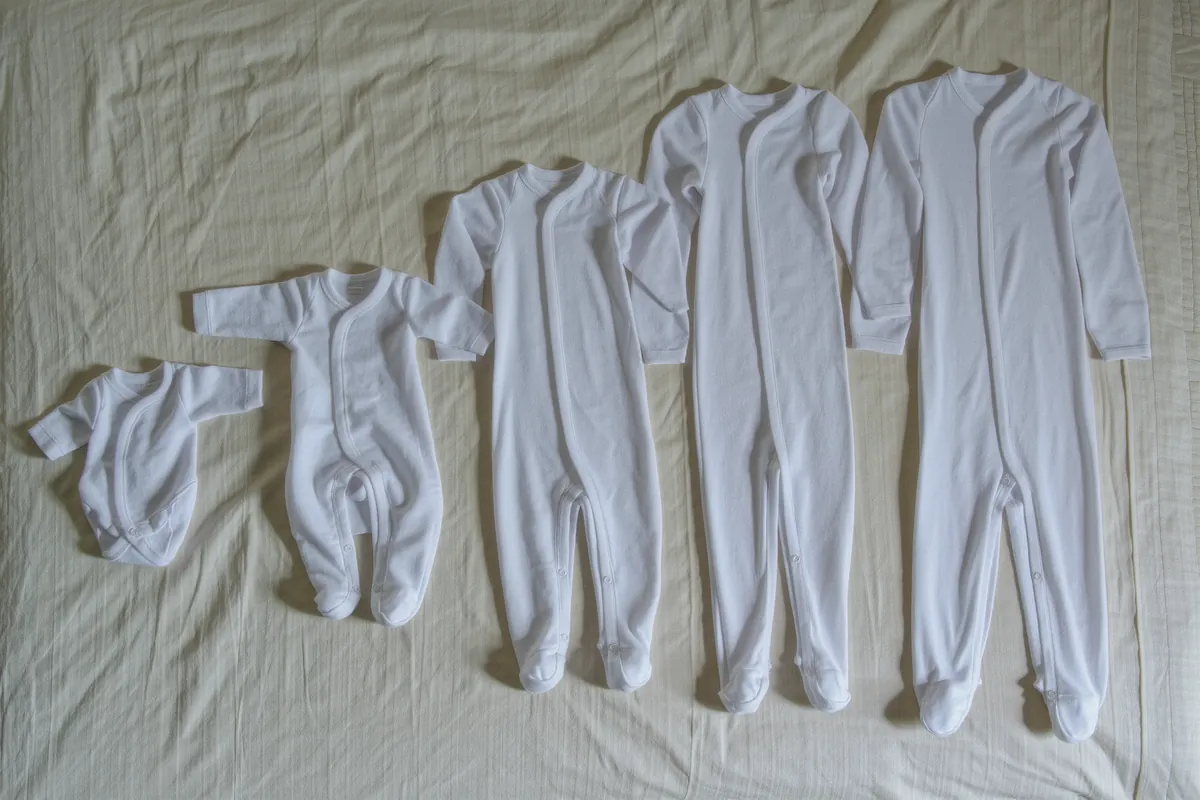

Baby and children’s clothing sizes, explained
Centimetres, months, years and T sizes: how the European, British, French and American systems work, how they relate to growth and how to choose well.
Tip: press Ctrl K or / anywhere to search.
Interactive tool
European sizes follow body height in centimetres. Enter an age or a height and the compass shows the size now and in six months.
In Germany and much of continental Europe, children’s sizes are named after body height: size 86 fits a child up to about 86 centimetres tall. British and French labels use age instead, and American sizes move from months to toddler sizes such as 2T and 3T before switching to numbers. Because children of the same age can differ by several centimetres, height is the more reliable guide. Our article on baby and children’s sizes explains the systems in detail.
To measure, lay a baby flat and measure from the top of the head to the heels; stand an older child barefoot against a wall.
A gift should fit when its season arrives. The compass estimates the size six months from now using typical growth: about 25 centimetres in the first year, roughly 10 to 12 in the second, and around 6 a year later on. When in doubt, choose the next size up for coats and knitwear, never for shoes.
Choose the larger size for outerwear, knitwear and sleepwear that should last a season, and the closer size for fitted pieces such as party dresses or trousers with a tailored cut. Sleeves can be turned back, but shoes must always fit now.
No. They are approximate, because they are based on age rather than height, and every brand grades its patterns a little differently. Use the table as orientation and check the brand’s own measurements whenever they are available.
Read more
Centimetres, months, years and T sizes: how the European, British, French and American systems work, how they relate to growth and how to choose well.
A calm guide to the first wardrobe: how many pieces of each kind, which sizes to choose, the details that make dressing easier and the safety basics for sleep.
Ten to fifteen well-chosen pieces per season, two or three base colours and a little arithmetic: how a small, coordinated wardrobe keeps pace with a growing child.

