The layette, what a newborn really needs
A calm guide to the first wardrobe: how many pieces of each kind, which sizes to choose, the details that make dressing easier and the safety basics for sleep.
Few wardrobes are planned with as much care, or as much guesswork, as the first one. It is easy to buy too much of the wrong thing and too little of what you will reach for every day. This guide sets out what a newborn really needs: how many pieces of each kind, which sizes to choose, which small details make dressing easier, and the safety basics around sleep and temperature.
A French word for a sensible ritual
is a French word for the set of clothes and linen prepared for a newborn. Preparing it ahead is a sensible habit: before the birth, while there is still time and calm, you gather what the first weeks will require, wash it and put it away in order.
A well-planned layette is small. Newborns spend most of their time sleeping, feeding and being held, and they need soft, simple layers far more than outfits. What matters is that every piece is easy to put on, easy to wash and suited to the season in which your baby arrives.
Sizes: why 56 matters more than 50
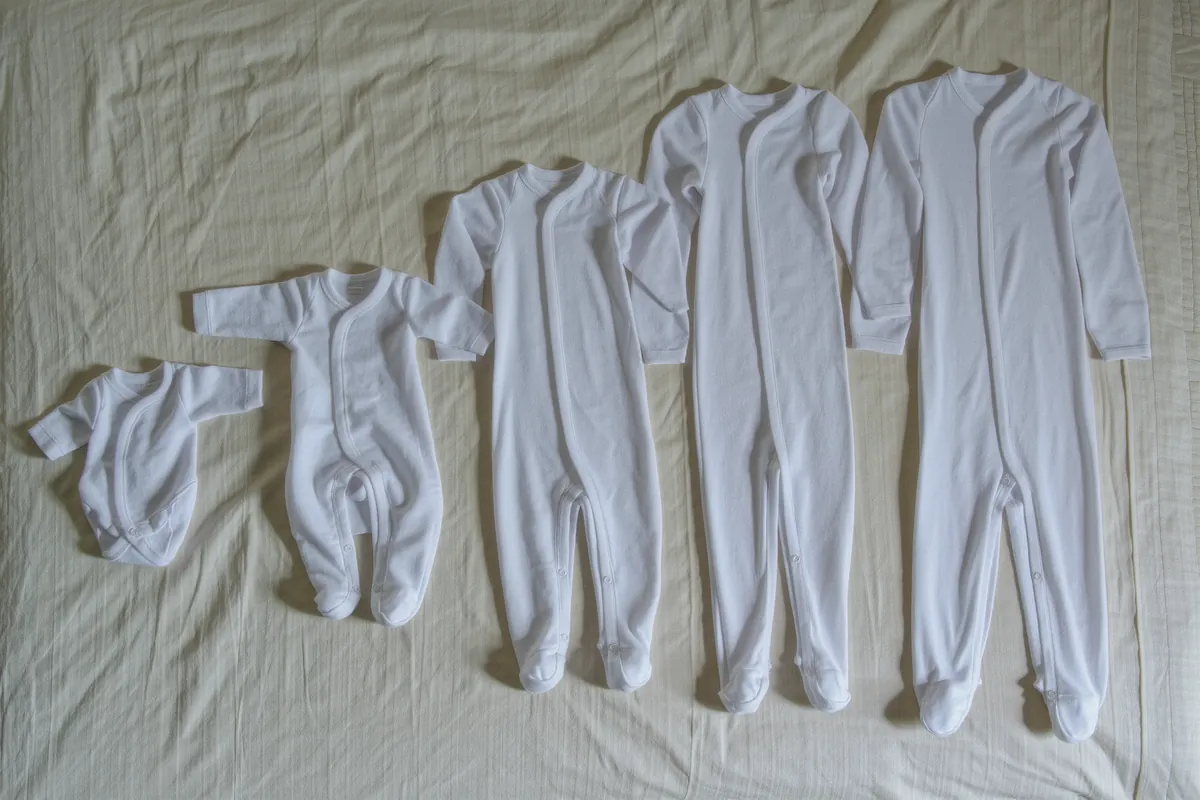
Common newborn sizes in Europe are 50 and 56, and the number refers to body length in centimetres. Many babies outgrow size 50 within the first weeks, which is why most of the layette is usually bought in sizes 56 and 62.
It can feel strange to fold away clothes that look a little roomy, but a newborn wears any single size for only a short time. A few pieces in size 50 can be useful if you expect a smaller baby, while the bulk of bodysuits and sleepsuits in 56, with some in 62, will carry you through the first weeks and beyond. In some countries baby clothes are labelled by age rather than length, so read labels carefully when you receive gifts from abroad.
How many of what
A typical starting list is shorter than most shopping lists suggest. It covers the everyday layers, a few warmer pieces and what you need for sleep.
- Six to eight bodysuits, the base layer worn next to the skin
- Four to six sleepsuits, for day and night
- Two or three cardigans or knit jackets as an extra layer
- Two or three hats for time outdoors
- Several pairs of socks
- A handful of muslin cloths for feeding, burping and wiping
- Two sleeping bags suitable for the season
Two sleeping bags rather than one means there is always a clean one ready while the other is in the wash. The same reasoning applies to bodysuits and sleepsuits: the numbers above allow for several changes a day and a regular wash, without a drawer full of clothes that are never worn.
Details that make dressing easier
Newborns rarely enjoy having clothes pulled over their heads, and their heads need support while you dress them. Look for bodysuits with envelope necklines, where the fabric overlaps at the shoulders. The opening stretches wide enough to pull the garment down over the body instead of over the head, which is especially welcome after a leaking nappy.
Fastenings deserve the same attention. Wrap styles that close at the side, and sleepsuits that open along the front and legs, let you dress a baby lying on their back with little fuss. Soft, flat seams and labels that do not rub are kinder to new skin than any decorative detail.
Mittens and scratch mitts can help with sharp nails, but many parents simply file the nails gently instead. If you do buy them, a few pairs are enough: they are small, easily lost and quickly outgrown.
A well-planned layette is small.
Sleep and temperature: the safety basics
No part of the layette matters more than what your baby sleeps in. Safe sleep guidance from the NHS and the American Academy of Pediatrics is clear: put babies to sleep on their back, on a firm, flat mattress, in a cot without pillows, duvets, bumpers or soft toys. A baby sleeping bag of the right size and avoids loose blankets, which is why two sleeping bags belong on the list.
Tog is a measure of how warm a textile is, and sleeping bags come in different tog ratings for different seasons and rooms. The NHS and The Lullaby Trust recommend a room temperature of about 16 to 20 degrees Celsius for a sleeping baby. A simple room thermometer makes this easy to check, and the guidance that comes with the sleeping bag tells you what to put on underneath.
The hats on your list are for outdoors: babies should not wear hats indoors to sleep. If you are unsure about the right clothing or sleeping bag for your baby, your midwife, health visitor or paediatrician can advise you.
Before the first wear
Wash new baby clothes before the first wear, with a mild detergent. New garments come straight from production, packaging or storage, and a gentle wash means they reach your baby clean and a little softer. A simple order keeps the job manageable in the final weeks before the birth.
- Sort the layette by size and set aside the pieces in 56 to be washed first.
- Remove tags and stickers, and close any poppers before washing.
- Wash with a mild detergent, following the care label.
- Dry, fold and store by type, with bodysuits and sleepsuits nearest to hand.
- Wash the larger sizes later, when your baby is close to needing them.
What remains after that is mostly patience. Babies grow quickly, gifts arrive, and your own sense of what you use will soon be sharper than any list. Start small, keep everything soft and simple, and add only what the first weeks show you are missing.
Glossary
- Layette
- The set of clothes and linen prepared for a newborn, from the French word for it.
- Envelope neckline
- A neckline with overlapping shoulders that opens wide, so a bodysuit can be pulled down over the body instead of over the head.
- Tog
- A measure of how warm a textile is, used to describe baby sleeping bags for different seasons and rooms.
- Muslin cloth
- A square of light, loosely woven cotton, used for feeding, burping and wiping.
- Sleepsuit
- A one-piece garment with long sleeves and legs, worn by babies for day and night.
Questions and answers
Should a newborn wear a hat to sleep?
No. The NHS and The Lullaby Trust advise that babies should not wear hats indoors to sleep. The hats in a layette are for time outdoors. For sleep, a baby sleeping bag of the right size and tog, in a room of about 16 to 20 degrees Celsius, is the recommended approach. If you are unsure, ask your midwife, health visitor or paediatrician.
Is it worth buying clothes in size 50?
A few pieces can be useful, especially if you expect a smaller baby. Many babies outgrow size 50 within the first weeks, though, so most of the layette is usually bought in sizes 56 and 62. Buying only a handful in 50 keeps you prepared without filling a drawer with clothes your baby will wear only briefly.
Do new baby clothes need washing before the first wear?
Yes, it is recommended to wash new baby clothes before the first wear, using a mild detergent. Garments come straight from production, packaging or storage, and a gentle wash means they reach your baby clean and a little softer. Follow the care label, and wash larger sizes later, when your baby is close to needing them.