
Flower girls and page boys, dressing children for a wedding
How to choose children for the procession, dress them in harmony with the wedding and plan the day so that young attendants feel safe, comfortable and proud.
Children walking down the aisle are often the moment guests remember with the warmest smile. They are also the least predictable part of any wedding. With a little thought about who walks, what they wear and how the day is organised, flower girls and can enjoy their role as much as everyone enjoys watching them.
Choosing the children
Flower girls and page boys are often between about three and ten years old. Younger children can be enchanting, but a long aisle, a crowd of unfamiliar faces and a hushed room are a lot to ask of a toddler. Older children usually understand what is expected and can carry rings, a basket or a train with real pride.
Temperament matters as much as age. Talk to the parents first and ask honestly how their child copes with new places, noise and long waits. A shy child should never be pushed into the procession; there are other ways to include them, such as handing out programmes or sitting with a parent near the front.
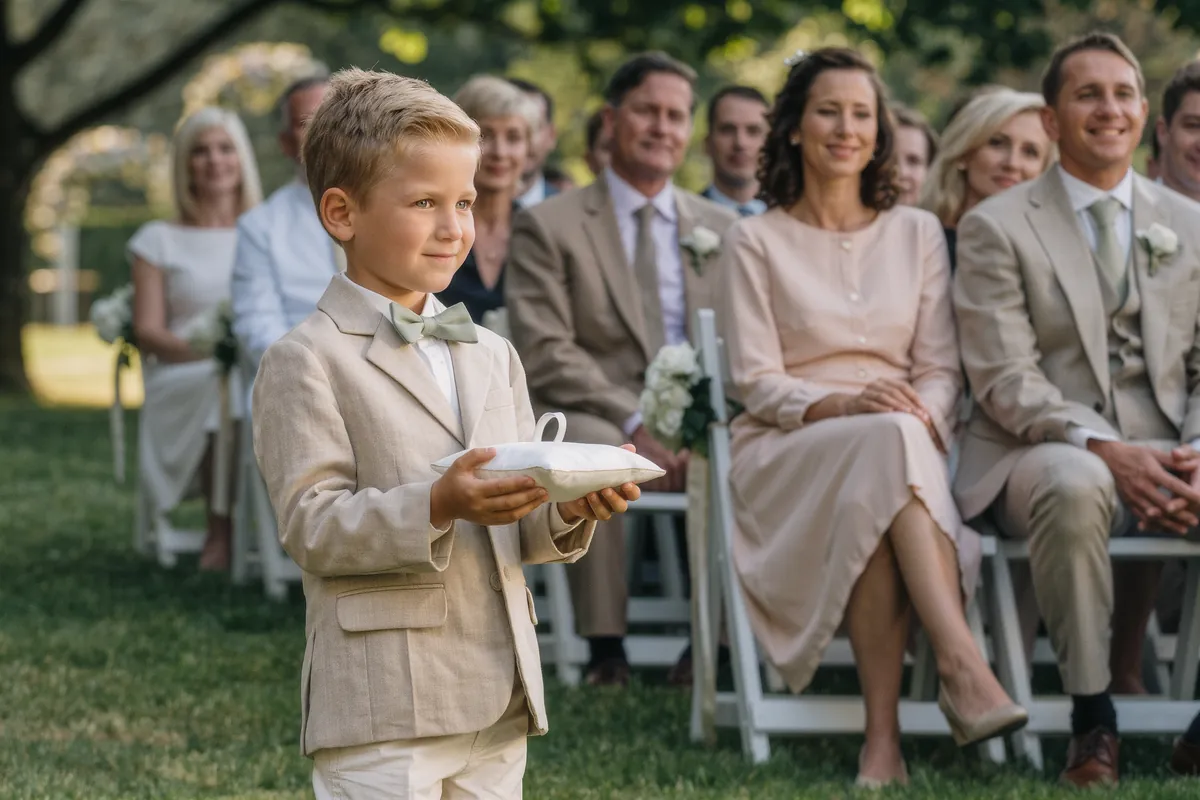
The traditional names suggest petals for girls and a ring cushion for boys, but the roles need not follow the names. Give each child the task that suits them, and keep it simple enough to manage with nerves.
Outfits that belong to the wedding
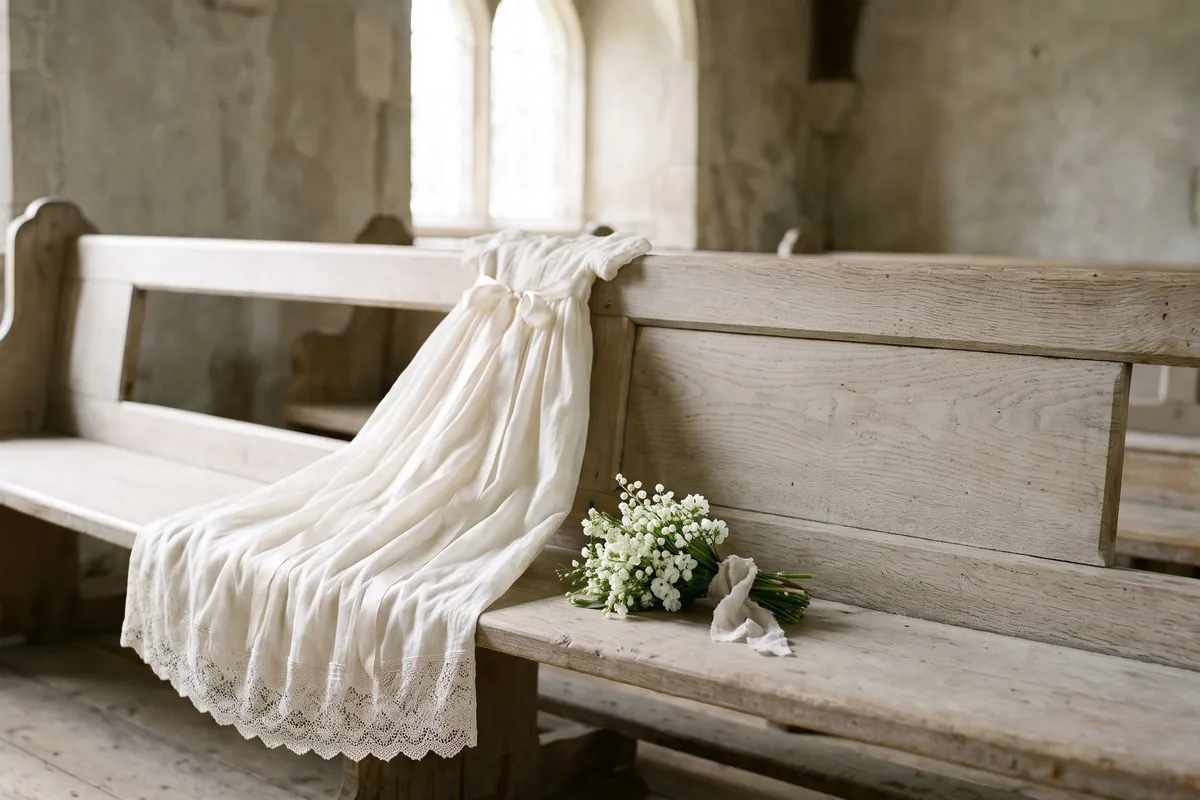
Children’s outfits usually echo the or the bridesmaids rather than copying the bridal gown. A miniature version of the bride’s dress can look like fancy dress, and it draws attention away from the one dress that should stand alone. A sash, a ribbon or a waistcoat in the wedding colour is often enough to link the children to the rest of the party.
Formal weddings sometimes draw on tradition. At the 2011 wedding of Prince William and Catherine Middleton, the two page boys wore uniforms modelled on those of officers of around 1820. Few families need anything so ceremonial, but the idea is useful: an outfit can take its cue from the setting, the season or the history of the place.
Fabric, fit and fittings
A wedding day is long, and children feel every scratchy seam. Natural fabrics such as cotton, linen and silk are more comfortable for a long day than stiff synthetic against the skin. If you love a full tulle skirt, make sure it has a cotton lining, so that the netting stays on the outside and the child feels only soft fabric.
Plan fittings with growth in mind. Children can grow noticeably in a few months, so order with a little room and arrange a final fitting close to the date. During that fitting, ask the child to move rather than stand still.
- Can the child sit on the floor and stand up again easily?
- Do sleeves and collars allow free movement of the arms and head?
- Is the waistband soft enough for a long day of sitting?
- Can the outfit be opened quickly for a trip to the toilet?
Shoes worth walking in
New shoes are a classic cause of tears on the day. Shoes should be worn in at home before the wedding, ideally in short spells around the house over several days. That way any rubbing shows up early, and the child gets used to how the shoes feel.
New soles can be slippery, especially on polished stone, old floorboards or a dance floor. A little sandpaper or tape on the soles helps. Choose closed or well-strapped styles that stay on during a walk, a run and a dance, and keep a pair of soft shoes in the bag for later.
The day itself, and a plan for wobbles
Have a short so children know where to walk and whom to walk to. A familiar adult at the end of the aisle helps: a parent, grandparent or older sibling who can crouch down, smile and receive them. A child who can see a known face has something to walk towards.
- Walk the route once with the children, slowly, the day before or on the morning itself.
- Show them exactly where to stop and who will be waiting.
- Agree a simple signal for when to start walking.
- Keep the outfit covered until the last moment before the procession.
- Let each child sit with a known adult once they reach the front.
Wobbles are part of childhood, not a failure of planning. If a child stops halfway, freezes or turns back, let a parent step in calmly. Nobody will remember a pause, but everyone will remember how kindly it was handled.
For the reception, plan a quiet corner, snacks and a change of clothes. After the photographs, children can swap into something softer, and a corner with cushions, books or colouring gives them somewhere to rest when the music grows loud.
Glossary
- page boys
- Young attendants who accompany the bride at a wedding, traditionally carrying her train or the rings.
- Foot Guards
- The infantry regiments of the British Army’s Household Division, known for their ceremonial duties.
- tulle
- A fine, light netting used for veils and full skirts, made from silk or synthetic fibres.
- wedding palette
- The small set of colours a couple chooses for flowers, attendants and decoration.
- rehearsal
- A short practice of the ceremony so that everyone knows where to walk and where to stand.
Questions and answers
Should the children’s outfits match the bride’s dress?
Usually not. Children’s outfits tend to echo the wedding palette or the bridesmaids rather than copy the bridal gown. A sash, a ribbon, a waistcoat or a small detail in the wedding colour links them to the party, while the bride’s dress keeps its own place. Comfortable natural fabrics such as cotton, linen and silk matter more than an exact match.
What if a child refuses to walk on the day?
Let it go gracefully. A short rehearsal and a familiar adult waiting at the end of the aisle make a calm walk more likely, but no plan is certain with young children. A parent can walk alongside, carry the child or let them watch from a seat instead. The wedding is not spoiled by a change of plan.
When should the children’s shoes be bought?
Early enough to wear them in at home before the wedding. Short spells around the house over several days reveal any rubbing while there is still time to adjust, and the child gets used to the feel of them. Check the soles too: new soles can be slippery, and a little sandpaper or tape helps on smooth floors.