A children’s room that grows with your child
How to plan a room that moves from baby to school child: a calm neutral base, furniture that converts, storage at child height and the Montessori idea of independence.
A child’s room changes faster than any other room in the house. Within a few years it has to hold a cot, then a bed, then a small table for drawing and eventually a desk for homework. Redecorating at every stage is tiring and rarely necessary. A room planned with growth in mind can carry a child from the first nights to the first school years with only gentle changes along the way.
A calm base that carries every stage
Think of the room in two layers. The first is the base: walls, floor and the large pieces of furniture. The second is everything that is easy to change, such as textiles, cushions, rugs, art and lighting. When the base is neutral and calm, the second layer can follow the child from year to year.
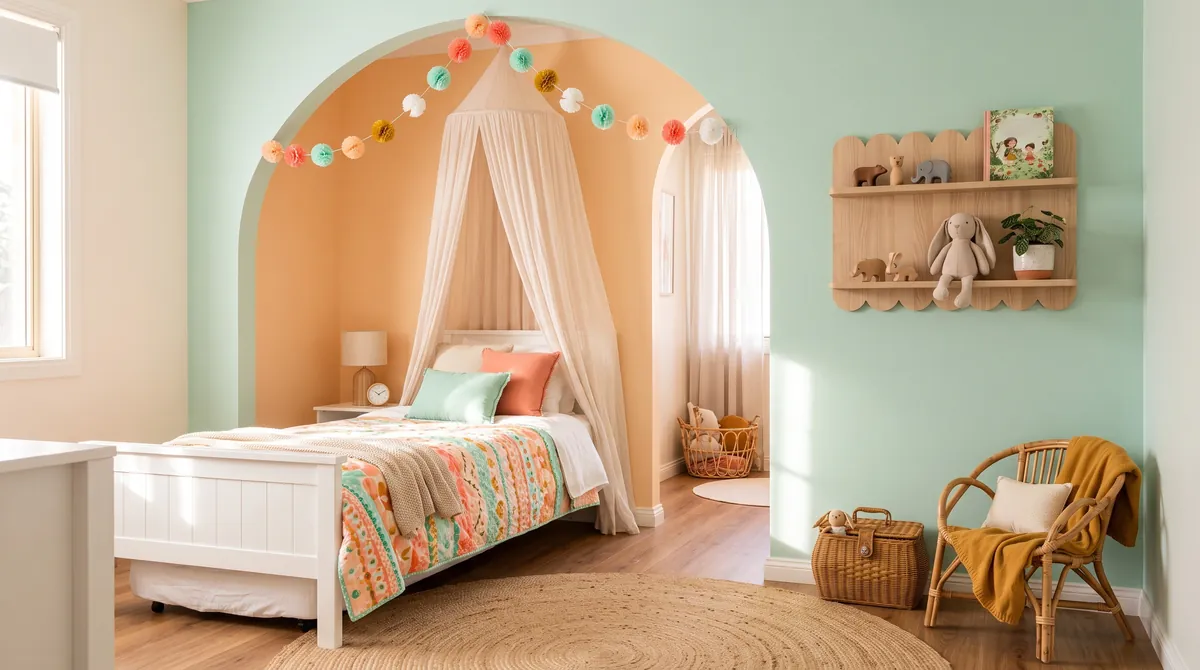
A neutral base does not have to be cold. Warm white, soft stone shades and natural wood make a quiet background that suits a baby as well as a ten year old. A new bedspread, a different set of prints or a fresh pair of curtains can then change the mood of the room without a full redecoration.
Furniture that converts
Convertible furniture extends the life of good pieces. Cot beds that become junior beds and changing units that become chests of drawers are two of the most useful examples. Paying attention to sturdy construction at the start means the same piece can serve the room for years rather than months.
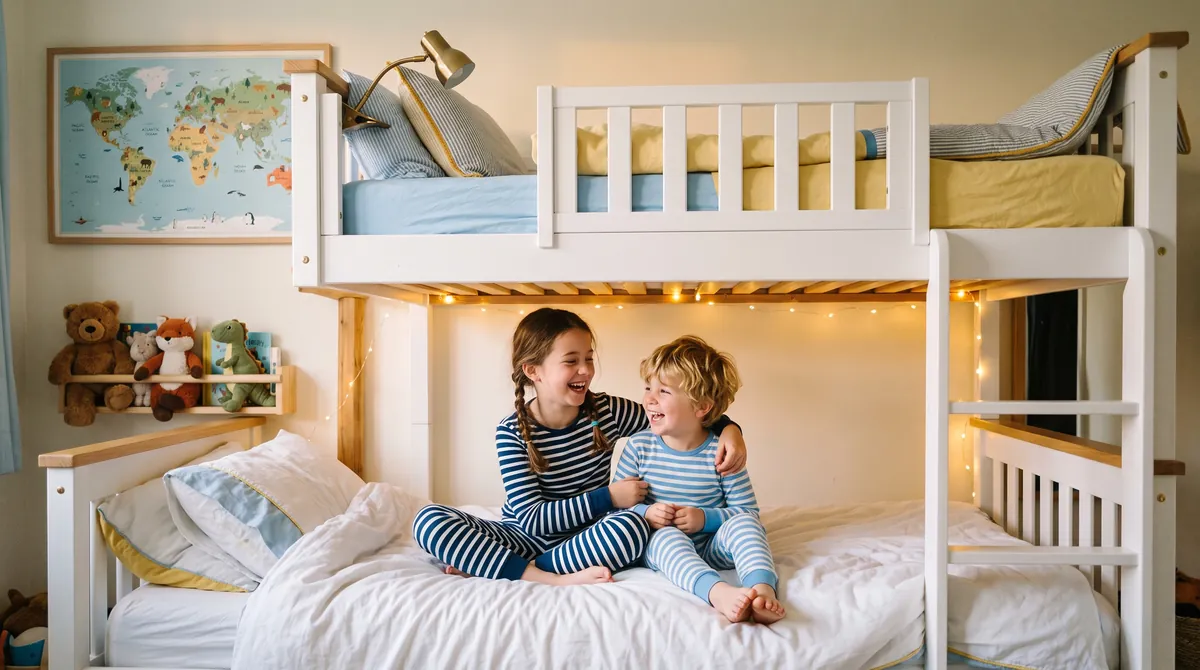
The move from cot to bed is the first big change. Many children make it between about 18 months and three years, and there is no need to hurry. A or low bed lets toddlers get in and out on their own, which gives them a real sense of independence at bedtime and in the morning.
Whatever the furniture, tall pieces such as wardrobes, bookcases and chests of drawers should be anchored to the wall. Children climb, pull open drawers and lean on shelves, and the fixing matters more with every year of growing curiosity.
The Montessori idea of independence
Maria Montessori, an Italian physician and educator, opened her first in Rome in 1907. Her approach favours child-sized furniture and open, low shelves that let children choose their activities and tidy them away on their own. More than a century later, the idea translates easily into a family home.
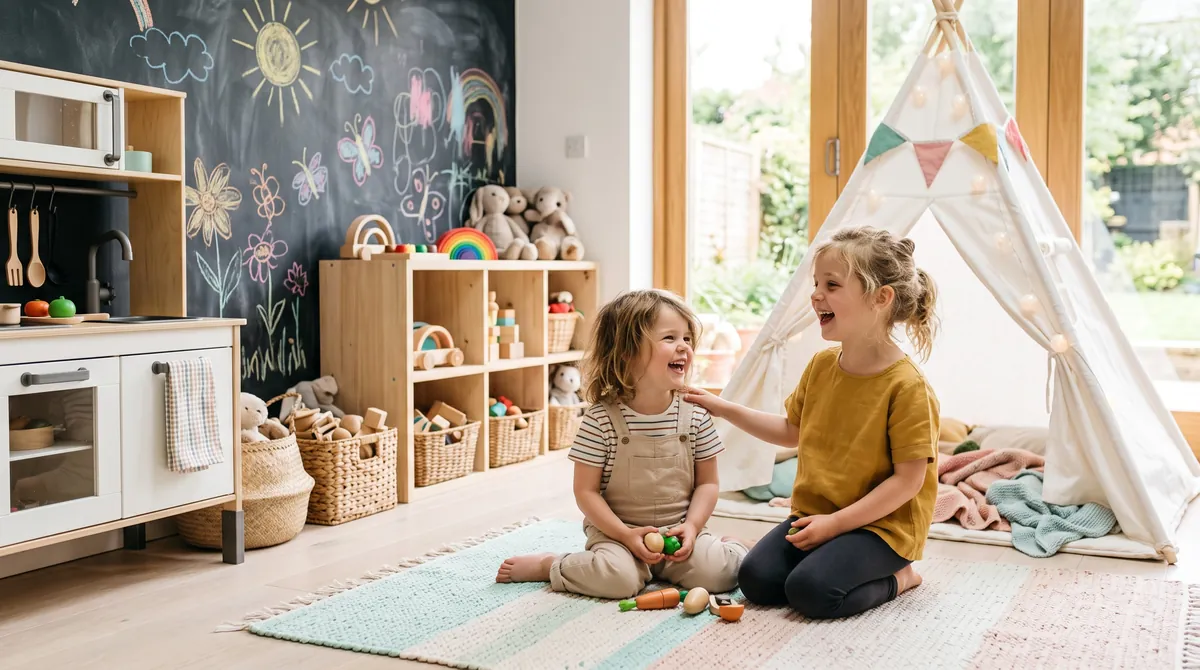
You do not need special furniture to follow it. A low bookcase, a small table with a chair at the right height and a few hooks within reach of a child’s hand already change how a child uses the room. When things are visible and reachable, a child can start and finish an activity without asking for help.
When things are visible and reachable, a child can start and finish an activity without asking for help.
Storage at child height
Storage in a growing room works best in two heights. Low, open shelves and baskets hold what a child uses every day, while higher cupboards keep seasonal clothes, spare bedding and anything fragile. Each basket can hold one kind of thing, so tidying away becomes a simple matching game.
Books deserve a place of their own. Displayed , on a narrow ledge or a front-facing shelf, they are easier for young children to choose than spines on a shelf, because a small child recognises a favourite story by its cover.
Toys benefit from restraint. Fewer toys on display, rotated every few weeks, keep a room calmer and the toys more interesting. A simple rotation looks like this:
- Choose a small selection of toys and books for the open shelves.
- Store the rest in closed boxes or a cupboard, out of sight.
- After a few weeks, notice which toys are still in use and which are ignored.
- Swap the ignored ones for a few from storage, and keep current favourites out.
From baby room to school room
By the early school years, the room begins to ask for a proper place to work. The small table can make way for a desk and a chair that fit the child, with a good lamp and a shelf for school things nearby. The low shelves stay, now filled with longer books, collections and projects.
Because the base has stayed calm, this is mostly a change of the second layer. New textiles, a different rug and a few pieces of the child’s own art on the wall are often enough to make the room feel grown up. Involving your child in these choices helps the room feel truly theirs.
A room that grows in this way asks for a little more thought at the start and far less effort later. The reward is a space that feels familiar to a child through every stage, and furniture that has earned its place many times over.
Glossary
- Casa dei Bambini
- Italian for “Children’s House”, the name of the first school Maria Montessori opened in Rome in 1907.
- Floor bed
- A mattress or very low bed frame at floor level that a toddler can get in and out of alone.
- Cot bed
- A cot whose sides can be removed so that it becomes a junior bed.
- Junior bed
- A small bed for a child who has outgrown the cot.
- Face out
- Shelving books with the front cover showing rather than the spine.
Questions and answers
When should my child move from a cot to a bed?
There is no single right moment. Many children move from a cot to a bed between about 18 months and three years. A floor bed or low bed makes the change easier, because toddlers can get in and out on their own. If you are unsure whether your child is ready, your health visitor or paediatrician can talk it through with you.
Do I need Montessori furniture to follow the idea?
No. The heart of the Montessori approach is child-sized furniture and open, low shelves that let children choose and tidy away on their own. A low bookcase, a small table and chair at the right height and a few hooks within reach of a child’s hand are enough to bring the idea into an ordinary room.
How many toys should be on display?
There is no fixed number. The principle is simply fewer: a small selection on open shelves, with the rest stored out of sight and rotated every few weeks. This keeps the room calmer and makes the toys more interesting each time they return. Watching which toys are actually used is the best guide to what stays out.