Designing a calm nursery: light, colour and materials
How to plan a serene first room for a baby, from the position of the cot to soft light for night feeds, muted colour, natural materials and the safety points that matter.
A nursery is the first room a baby knows, and for the first months it is also a room you will know at every hour of the day and night. The best ones feel quiet before anything else: soft light, gentle colour, honest materials and nothing that competes for attention. Calm, however, begins with safety. A room arranged well for sleep, light and air is easier to rest in, for the baby and for you.
Begin with the cot and the layout
Plan the room around the cot rather than fitting it in last. Place it away from radiators, away from windows and well away from blind cords, then let the rest of the furniture follow. A clear path from the door to the cot matters more than you might expect when you walk in at night with the lights low.
The cot itself should be simple. Safe sleep guidance asks for a firm, flat, well fitting mattress and nothing else: no pillows, no duvets, no bumpers and no soft toys in the cot. A beautiful quilt or a favourite plush animal can still belong to the room, folded over a chair or placed on a shelf, just not where the baby sleeps. If you have questions about safe sleep, your midwife or health visitor is the right person to ask.
Around the cot, think in zones. A comfortable chair for feeding, a changing surface with everything within reach and storage for clothes and linen are usually enough. Fewer pieces, placed with care, make a small room feel generous.
A palette that settles the eye
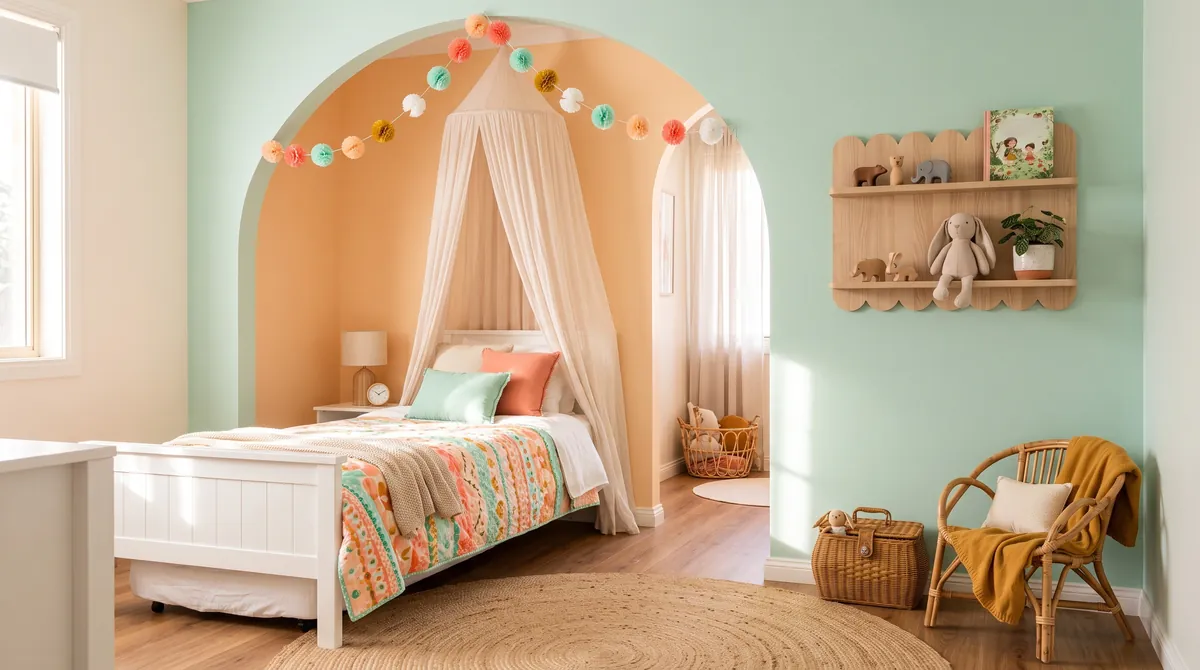
Colour sets the mood of a nursery more quickly than any object in it. Muted, natural shades work best: sage, oatmeal, soft blue and warm white all sit quietly in daylight and in lamplight alike. They create a calm room for a newborn and they also suit a growing child, so the walls need not be repainted the moment the cot gives way to a bed.
Keep stronger colour for small, changeable things such as a framed print, a cushion on the nursing chair or a row of picture books. When the large surfaces are restful, these accents can come and go over the years without the room ever feeling busy.
Fewer pieces, placed with care, make a small room feel generous.
Light for daytime naps and night feeds
Babies often nap through the brightest hours, so control of daylight is worth planning early. Blackout blinds help daytime naps by keeping the room dim, and lined curtains hung in front of them soften the window and add a layer of texture.
At night the aim is the opposite: just enough light to feed, change and settle a baby without waking anyone fully. A dimmable, warm light makes night feeds calmer. A low lamp on a side table, or a dimmer on the main light, is far gentler than a bright ceiling light switched on at full strength.
Whatever window covering you choose, look closely at the cords. Looped blind and curtain cords are a strangulation risk for young children. Keep them out of reach with cleats fixed high on the wall, or choose cordless blinds, which remove the question altogether.
Natural materials and fresh air
Natural materials give a nursery its quiet character. Wood, linen and wool are pleasant to the touch, age gracefully and bring warmth to a muted palette. A wooden cot, linen curtains and a wool rug on the floor already make a room feel complete.
Fresh air matters as much as texture. Paint and new furniture can release , usually shortened to VOCs, into the room. Choose low-VOC paints and plan to decorate a few weeks before the birth, so the room has time to air before the baby arrives. Opening the windows whenever you can during those weeks lets that happen.
Warmth, furniture and the final checks
A comfortable temperature is part of a calm room. The NHS and The Lullaby Trust recommend a room temperature of about 16 to 20 degrees Celsius for a sleeping baby. A simple room thermometer, placed away from the radiator and the window, gives you an honest reading.
Tall furniture needs one more step. Wardrobes and chests of drawers should be anchored to the wall to prevent , even if they feel heavy and steady today. Babies soon begin to pull themselves up and climb, and a fixing done now is one less task later.
A short walk through the finished room, in this order, catches most of what matters:
- Check the cot: a firm, flat, well fitting mattress and nothing else inside.
- Check its position: away from radiators, windows and blind cords.
- Secure every blind and curtain cord with a , or fit cordless blinds.
- Anchor wardrobes and chests of drawers to the wall.
- Let the room air after decorating, then check the temperature with a thermometer.
Once those checks are done, the rest is a matter of taste. A calm nursery is rarely about buying more. It is about choosing a few good things, giving them space and letting soft light do the rest.
Glossary
- Volatile organic compounds
- Gases that some paints, finishes and new furniture release into the air, usually shortened to VOCs.
- Low-VOC paint
- Paint formulated to release fewer volatile organic compounds than conventional paint.
- Blackout blind
- A window blind made of opaque fabric that keeps out most daylight, useful for daytime naps.
- Cleat
- A small hook fixed high on the wall, around which a blind or curtain cord is wound to keep it out of reach.
- Tip-over
- The fall of a tall piece of furniture, a risk reduced by anchoring it to the wall.
Questions and answers
Which colours suit a calm nursery?
Muted, natural colours work well: sage, oatmeal, soft blue and warm white. They look restful in daylight and in lamplight, and they suit a growing child as well as a newborn, so the walls can stay as they are when the cot is replaced by a bed. Bring in stronger colour through small things such as prints, cushions and books, which are easy to change.
How warm should a nursery be at night?
The NHS and The Lullaby Trust recommend a room temperature of about 16 to 20 degrees Celsius for a sleeping baby. A room thermometer, placed away from radiators and windows, is the easiest way to check. Keep the cot away from the radiator as well. If you are unsure how to dress your baby for sleep, ask your midwife or health visitor.
When is the best time to decorate the nursery?
Ideally a few weeks before the birth. Paint and new furniture can release volatile organic compounds, so decorating early gives the room time to air before the baby sleeps there. Choosing low-VOC paints helps as well. Use the same weeks to anchor tall furniture to the wall, secure blind and curtain cords and settle the position of the cot.